

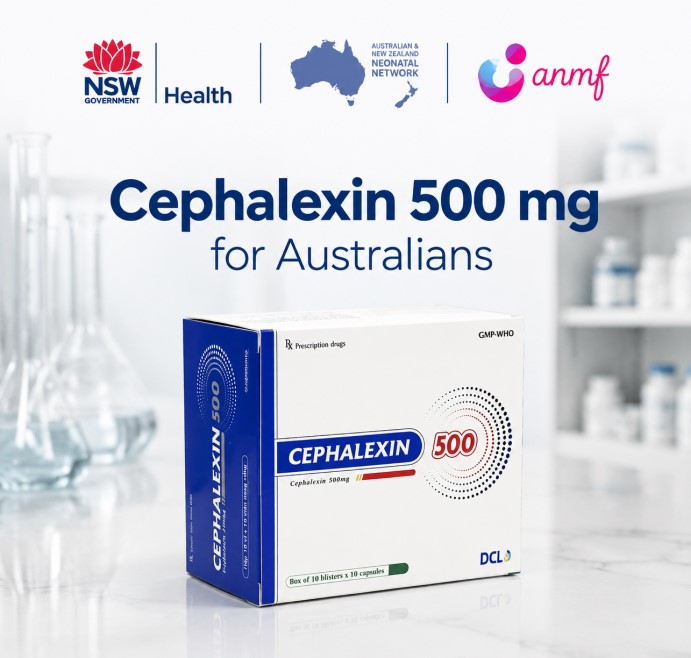
| Parameter | Details |
|---|---|
| Drug name | Cephalexin (Cefalexin) |
| Active ingredient | Cefalexin monohydrate |
| Drug class | First-generation cephalosporin antibiotic |
| Available doses | 250 mg, 500 mg capsules; 125 mg/5 mL and 250 mg/5 mL oral suspension |
| Australian brands | APO-Cephalexin, Keflex, Cephalexin WGR, Cefalexin Sandoz |
| Prescription required | Yes – prescription medicine (some pharmacists may prescribe for UTI) |
| Approximate price (20 capsules) | From ~A$7 (PBS) to ~A$14–16 (private) |
| Regulator | Therapeutic Goods Administration (TGA) |
Cephalexin 500 mg is one of Australia’s most commonly prescribed oral antibiotics. This guide covers everything you need to know — what infections it treats, how to take it correctly, what it costs at Chemist Warehouse and other pharmacies, and whether you can get it without seeing a GP.
- What is cephalexin and how does it work?
- What is cephalexin 500 mg used for?
- Dosage for adults
- Is cephalexin 500 mg a strong antibiotic?
- Do you need a prescription in Australia?
- Price in Australia
- Side effects
- Cephalexin and alcohol
- Cephalexin vs amoxicillin
- FAQ
What is cephalexin and how does it work?
Cephalexin (also spelled cefalexin) is a first-generation cephalosporin antibiotic. It belongs to the beta-lactam family of antibiotics and works by disrupting the formation of the bacterial cell wall, causing the bacteria to break apart and die.
Key facts about cephalexin:
- Active against gram-positive bacteria including Staphylococcus aureus (methicillin-sensitive) and Streptococcus species
- Also active against some gram-negative bacteria including E. coli, Proteus mirabilis, and Klebsiella
- Oral bioavailability is high — absorbed rapidly from the gastrointestinal tract
- Over 90% is excreted unchanged in the urine within 8 hours, which makes it effective for urinary tract infections
- Available as capsules and oral suspension
- Registered on the Australian Register of Therapeutic Goods (ARTG) under TGA oversight
Always take cephalexin as directed by your doctor or pharmacist. Do not use leftover antibiotics from a previous course.
What is cephalexin 500 mg used for?
Cephalexin 500 mg is prescribed for a range of bacterial infections in Australia. It is not effective against viral infections such as colds or flu.
- Urinary tract infections (UTI) — one of the most common uses; 500 mg twice daily is the standard approach for mild, uncomplicated UTIs
- Skin and soft tissue infections — cellulitis, impetigo, infected wounds caused by staphylococci or streptococci
- Respiratory tract infections — pharyngitis (sore throat), tonsillitis caused by group A beta-haemolytic streptococci
- Tooth and dental infections — often used when penicillin cannot be taken
- Sinus infections (bacterial sinusitis) — when caused by susceptible organisms
- Ear infections (otitis media) — in children and adults
- Bone infections (osteomyelitis) — in some cases under specialist guidance
Your doctor will confirm whether cephalexin is appropriate for your specific infection based on culture and sensitivity tests where needed.
Cephalexin 500 mg dosage for adults
The correct dose depends on the type and severity of the infection. The following is a general guide — always follow your doctor’s or pharmacist’s instructions.
| Infection type | Usual adult dose | Frequency | Typical duration |
|---|---|---|---|
| Mild UTI | 500 mg | Twice daily (every 12 hours) | 3–7 days |
| Skin/soft tissue infection | 500 mg | Every 6–12 hours | 7–10 days |
| Strep throat / tonsillitis | 500 mg | Twice daily | 10 days |
| Tooth/dental infection | 500 mg | Every 6 hours (4 times a day) | 5–7 days |
| Severe infections | 1,000 mg | Every 6–12 hours | As prescribed |
Maximum adult dose: 4 g per day. If more than 4 g per day is required, parenteral (injectable) cephalosporins should be considered instead.
Important: Complete the full course even if you feel better after a few days. Stopping early can allow bacteria to survive and develop resistance. The choice of dose and duration must be determined by your doctor or pharmacist.
For cephalexin 500 mg 4 times a day regimens (common for dental or more severe infections), space doses evenly — approximately every 6 hours.
Is cephalexin 500 mg a strong antibiotic?
Cephalexin is a moderate-spectrum antibiotic, not a broad-spectrum one. It is effective against a defined range of gram-positive and some gram-negative bacteria, but it does not cover MRSA (methicillin-resistant Staphylococcus aureus), anaerobes, or most gram-negative hospital-acquired pathogens.
For common community-acquired infections — skin infections, UTIs, strep throat — cephalexin 500 mg is considered appropriately effective. For complex, hospital-acquired, or resistant infections, stronger or different antibiotics are needed.
In terms of the Australian context, cephalexin is listed on the Pharmaceutical Benefits Scheme (PBS), reflecting its established role in standard antibiotic therapy.
Do you need a prescription for cephalexin in Australia?
Yes. Cephalexin is a prescription-only medicine in Australia, regulated by the TGA. You generally need a valid prescription from a GP or other authorised prescriber to obtain it.
Exception for UTIs: In many states and territories, pharmacists are now authorised to prescribe cephalexin for uncomplicated urinary tract infections without a GP visit — this depends on your location and individual pharmacy. This does not apply to males, children, or pregnant people, who must see a doctor.
How to get cephalexin quickly in Australia:
- GP visit — in person or via telehealth (same-day appointments often available)
- Pharmacist prescribing for UTI — available in most states; ask your local pharmacy
- Urgent care clinic or after-hours GP — if your regular GP is unavailable
Do not use cephalexin obtained without a prescription or from informal sources — incorrect use of antibiotics contributes to antibiotic resistance, which is a serious public health concern in Australia.
Cephalexin 500 mg price in Australia
| Brand / Source | Pack size | Approximate price (AUD) | Notes |
|---|---|---|---|
| Keflex (PBS) | 20 capsules 500 mg | ~A$7.70 (concession) / ~A$13.99 (general) | PBS listed |
| APO-Cephalexin (PBS) | 20 capsules 500 mg | ~A$7.70–A$14.00 | PBS listed, widely available |
| Cephalexin WGR | 20 capsules 500 mg | ~A$13.99 (private) | Available at Chemist Warehouse |
| Cefalexin Sandoz | 20 capsules 500 mg | ~A$13.99–A$16.00 (private) | Available at most pharmacies |
Prices are indicative and may vary between pharmacies. PBS pricing applies only with a valid PBS prescription. Check with your pharmacy for the most current pricing.
Cephalexin is available at major Australian pharmacy chains including Chemist Warehouse, Priceline, and Terry White Chemists, as well as independent pharmacies nationwide.
Side effects of cephalexin 500 mg
Most side effects of cephalexin are mild and resolve once you finish the course.
Common side effects (may affect up to 1 in 10 people):
- Nausea
- Diarrhoea
- Stomach upset or abdominal pain
- Vomiting
- Headache
- Dizziness
Less common but more serious side effects — seek medical advice promptly if you experience:
- Skin rash, hives, or itching — may indicate allergic reaction
- Difficulty breathing or swelling of the face/throat — call 000 immediately (anaphylaxis)
- Severe or persistent diarrhoea, especially if it contains blood — possible Clostridioides difficile infection
- Yellowing of the skin or eyes (jaundice)
- Dark urine or unexplained bruising
Drug interactions to discuss with your doctor or pharmacist:
- Metformin — cephalexin can increase metformin levels in the blood; monitor blood glucose if you have diabetes
- Probenecid — slows the elimination of cephalexin, increasing its concentration
- Warfarin — some cephalosporins may affect anticoagulant effect; monitor INR
Penicillin allergy: If you are allergic to penicillin, inform your doctor before taking cephalexin. There is a small possibility of cross-reactivity between penicillins and cephalosporins. Most people with penicillin allergy can safely take cephalexin, but your doctor will assess this individually. Consult your doctor or pharmacist if you are unsure.
Cephalexin and alcohol
Cephalexin does not cause a dangerous reaction with alcohol (unlike some other antibiotics such as metronidazole). However, drinking alcohol while taking any antibiotic is generally not recommended because:
- Alcohol can worsen side effects such as nausea, dizziness, and stomach upset
- Alcohol may impair your immune system’s ability to fight the infection
- Dehydration from alcohol can affect how quickly cephalexin is excreted via the kidneys
An occasional drink is unlikely to significantly affect how cephalexin works. However, heavy drinking during a course of antibiotics is not advisable. Speak with your pharmacist if you have questions about your specific situation.
Cephalexin vs amoxicillin
Both cephalexin and amoxicillin are oral antibiotics commonly used in Australia, but they have different profiles:
| Feature | Cephalexin 500 mg | Amoxicillin 500 mg |
|---|---|---|
| Drug class | Cephalosporin (beta-lactam) | Penicillin (beta-lactam) |
| Typical uses | Skin, UTI, dental, strep throat | Ear, chest, dental, strep throat |
| Penicillin allergy | Often safe (assess individually) | Contraindicated |
| Activity vs staph | Yes (methicillin-sensitive) | Limited (without clavulanate) |
| PBS listed in AU | Yes | Yes |
Your doctor will choose the most appropriate antibiotic based on the type of infection, likely causative bacteria, your allergy history, and local resistance patterns. Do not substitute one for the other without medical advice.
Frequently asked questions
How long does cephalexin take to work for a UTI?
Most people with an uncomplicated UTI notice improvement within 24–48 hours of starting cephalexin. However, it is essential to complete the full course (usually 3–7 days) as prescribed, even if symptoms resolve sooner. If you see no improvement after 48 hours, contact your doctor.
Can I take cephalexin if I’m allergic to penicillin?
Possibly, but you must inform your doctor. Cephalexin and penicillin are in the same beta-lactam family and share some structural similarity. The risk of cross-reactivity is considered low (around 1–2%), but your doctor will assess your specific allergy history before prescribing. Do not take cephalexin without medical clearance if you have had a severe penicillin reaction.
Is cephalexin 500 mg safe during pregnancy?
Cephalexin is classified as Category A in Australia (TGA), meaning studies in a large number of pregnant women have not shown increased risk of harm to the foetus. It is one of the antibiotics considered relatively safe during pregnancy, but should only be taken under medical supervision. Pregnant women cannot obtain cephalexin through pharmacist prescribing for UTI — a GP visit is required.
Can I get cephalexin without seeing a doctor in Australia?
In most Australian states, pharmacists are authorised to prescribe and dispense cephalexin for uncomplicated UTIs in non-pregnant adult women without a GP visit. This service is available at many Chemist Warehouse, Priceline, and independent pharmacy locations. For all other infections, a prescription from a doctor is required. Telehealth GP services can provide same-day online prescriptions if you cannot attend in person.
What is APO-Cephalexin and is it the same as Keflex?
Yes. APO-Cephalexin (made by Apotex) and Keflex are both brand names for the same active ingredient — cefalexin monohydrate 500 mg. They are bioequivalent, meaning they deliver the same amount of active drug into the bloodstream and work identically. APO-Cephalexin is typically more affordable. Your pharmacist may dispense either brand against a prescription for cefalexin.
Should I take cephalexin with food?
Cephalexin can be taken with or without food. Taking it with food may help reduce stomach upset, which is one of the more common side effects. Try to take each dose at evenly spaced intervals to maintain a consistent level of the antibiotic in your body.
How should I store cephalexin capsules?
Store cephalexin capsules below 25°C, away from direct sunlight and moisture. Keep them in the original packaging. The oral suspension (liquid form) must be refrigerated at 2–8°C after preparation and discarded after 14 days. Keep all medicines out of reach of children.
Can I take cephalexin for a sinus infection?
Cephalexin can be prescribed for bacterial sinusitis caused by susceptible organisms such as Streptococci, S. pneumoniae, and methicillin-sensitive S. aureus. However, most sinus infections are viral and do not require antibiotics. Your doctor will assess whether antibiotics are appropriate for your situation. Do not self-medicate with leftover cephalexin.
Summary
Cephalexin 500 mg is a well-established, TGA-approved antibiotic used widely in Australia for skin infections, UTIs, dental infections, strep throat, and more. It is available under several brand names including APO-Cephalexin, Keflex, and Cephalexin WGR, and is PBS-subsidised for eligible patients. Most Australians can access it quickly through a GP, a telehealth consultation, or — for uncomplicated UTIs — directly through a pharmacist.
If you have questions about whether cephalexin is right for your infection, speak with your doctor or pharmacist. For more information, visit the Therapeutic Goods Administration (TGA) or Healthdirect Australia.
Disclaimer: The information on this page is for general informational purposes only and does not constitute medical advice. Always consult a qualified healthcare professional before starting, changing, or stopping any medication.
See also: Antibiotics in Australia