

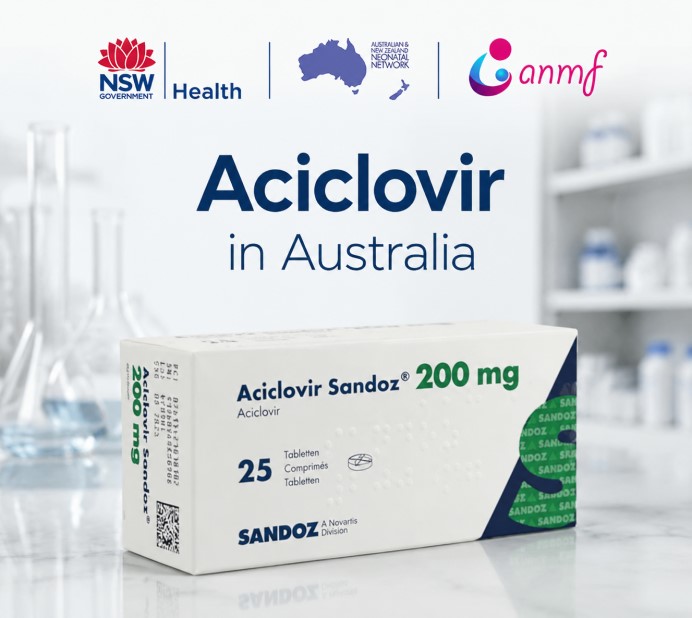
Aciclovir in Australia is available without a prescription as a cold sore cream, or with a prescription as tablets for genital herpes, shingles, and other herpes virus infections.
What is aciclovir?
Aciclovir (also spelled acyclovir) is an antiviral medicine used to treat infections caused by the herpes simplex virus (HSV) and varicella-zoster virus (VZV). It has been available in Australia since the early 1980s and remains one of the most widely used antivirals in the country.
Aciclovir works by blocking viral DNA replication — it stops the virus from multiplying, which shortens outbreaks and reduces their severity. It does not cure herpes; the virus remains dormant in nerve tissue between outbreaks. With long-term daily (suppressive) therapy, it can also reduce how often outbreaks occur.
The medication is approved by the Therapeutic Goods Administration (TGA) and is available in several forms depending on what is being treated. For all forms, starting treatment at the very first sign of symptoms gives the best results.
Forms available in Australia and prescription status
Australia classifies medicines by schedule based on the level of oversight required. Aciclovir spans three different schedules depending on the form — so whether you need a prescription or not depends entirely on what you are buying.
| Form | Strength | Main use | Schedule | Prescription needed? |
|---|---|---|---|---|
| Topical cream 5% | 50 mg/g | Cold sores on lips and face | Unscheduled | No — shelf access at pharmacies and supermarkets |
| Zovirax Duo cream | Aciclovir 5% + hydrocortisone 1% | Cold sores (ages 12+) | S3 — Pharmacist Only | No prescription, but pharmacist consultation required |
| Oral tablets | 200 mg, 400 mg, 800 mg | Genital herpes, shingles, suppression | S4 — Prescription Only | Yes — GP, nurse practitioner or telehealth |
| Eye ointment 3% (Virupos) | 30 mg/g | Herpes simplex eye infections | S4 — Prescription Only | Yes — ophthalmologist or GP |
| IV infusion | 250 mg/10 mL, 500 mg/20 mL | Severe or disseminated infections | Hospital use only | Hospital only — not community dispensed |
Plain aciclovir cold sore cream sits on open shelves at Chemist Warehouse, Priceline, Woolworths, Coles and most pharmacies — no interaction needed. Zovirax Duo carries a slightly higher schedule because it contains a corticosteroid; a brief conversation with the pharmacist is required before purchase.
All aciclovir tablets are Schedule 4. A valid Australian prescription is required — in person or via a registered telehealth provider. Websites offering aciclovir tablets without requesting a prescription are operating illegally in Australia.
What is aciclovir used for?
In Australian adults, aciclovir is primarily used for three conditions caused by viruses in the herpes family.
Cold sores (herpes labialis)
Cold sores are caused by HSV-1 and typically appear on or around the lips. Without treatment, they resolve in 7–10 days. Aciclovir cold sore cream applied at the tingle or itch stage — before a blister forms — can shorten healing time by roughly one day and reduce blister severity. For people with frequent or severe outbreaks (six or more per year), a GP may prescribe aciclovir tablets for a stronger systemic effect. See Healthdirect’s cold sores guide for more on triggers and prevention.
Genital herpes
Genital herpes is most commonly caused by HSV-2, though HSV-1 is increasingly responsible. Oral aciclovir tablets are the standard treatment for both first-episode and recurrent genital herpes. A first episode is typically treated over 5–10 days; recurrent episodes over 2–5 days. People with frequent recurrences may benefit from daily suppressive therapy, which reduces both recurrence frequency and the risk of transmission to a partner.
Topical aciclovir cream is not appropriate for genital herpes — it is approved only for cold sores on the lips and face and is not effective on genital or mucosal tissue. For more on treatment options including PBS pricing, see this overview of herpes treatment in Australia.
Shingles (herpes zoster)
Shingles is caused by reactivation of the varicella-zoster virus — the same virus responsible for chickenpox. It presents as a painful blistering rash, typically on one side of the body or face. The standard aciclovir regimen is 800 mg five times daily for seven days. Treatment should start within 72 hours of rash onset for the best effect; beyond this window the benefit diminishes, though doctors may still prescribe antivirals for ongoing new blister formation or in immunocompromised patients. Early treatment reduces the severity and duration of the rash and may lower the risk of post-herpetic neuralgia — prolonged nerve pain that can persist after the rash heals.
Other uses
Aciclovir is also used for chickenpox in adults, for herpes simplex eye infections (as the prescription eye ointment Virupos), and in hospital for herpes encephalitis and severe disseminated infections via IV infusion. For clinical use in newborns, see the ANMF neonatal aciclovir guideline.
Dosage guide for adults
The correct dose depends on the condition, whether it is a first or recurrent episode, and the patient’s kidney function. The table below is a general guide — always follow your prescription or the advice of your pharmacist or doctor.
| Condition | Dose | Frequency | Duration |
|---|---|---|---|
| Cold sores — topical cream 5% | Small amount applied to affected area | 5× daily (~every 4 hours during waking hours) | 5 days |
| Cold sores — oral tablets | 200 mg | 5× daily | 5 days |
| Genital herpes — first episode | 200 mg or 400 mg | 5× daily (200 mg) or 3× daily (400 mg) | 5–10 days |
| Genital herpes — recurrent episode | 800 mg or 400 mg | 3× daily for 2 days (800 mg) or 3× daily for 5 days (400 mg) | 2–5 days |
| Genital herpes — suppressive therapy | 400 mg | Twice daily | Ongoing — reviewed every 6–12 months |
| Shingles (herpes zoster) | 800 mg | 5× daily | 7 days |
| Chickenpox in adults | 800 mg | 5× daily | 7 days |
Aciclovir vs valaciclovir — a note on dosing frequency
The need to take aciclovir up to five times a day is its main practical drawback compared to valaciclovir (typically twice daily) or famciclovir. Valaciclovir is a prodrug that the body converts to aciclovir — it achieves the same active levels with fewer daily doses because of better oral absorption. Both are listed on the PBS and are clinically effective; valaciclovir is now more commonly prescribed for genital herpes and shingles due to the simpler schedule. Aciclovir remains an important option, particularly for patients where cost or specific clinical factors make it preferable. A workable schedule for the five-times-daily regimen is 8 am, 12 pm, 4 pm, 8 pm and midnight.
Kidney function and dose adjustment
Aciclovir is cleared by the kidneys. Reduced kidney function requires a lower dose or longer interval between doses to prevent accumulation. Drinking plenty of water throughout any oral aciclovir course is important — particularly for older patients, those with kidney disease, or anyone taking other medicines that can affect kidney function such as NSAIDs (e.g. ibuprofen). Always tell your prescriber about any kidney conditions before starting treatment.
Aciclovir cream vs tablets — which should you use?
The right form depends on where the infection is, how severe your outbreaks are, and whether you want to treat without a prescription.
Cream is appropriate when:
- You have a cold sore on your lip or face that is mild to moderate
- You want to treat without visiting a GP — cream is available over the counter
- You have caught it at the first tingle or itch — the earlier cream is applied, the more effective it is
Tablets are necessary when:
- You have genital herpes — cream is not appropriate for genital or mucosal sites
- You have shingles or chickenpox
- Your cold sores are frequent (six or more per year), severe, or take longer than 10 days to heal
- You are immunocompromised — a doctor should direct antiviral treatment in this case
- You want suppressive therapy to reduce how often outbreaks occur
Clinical evidence shows topical aciclovir cream shortens cold sore duration by roughly one day on average. Oral aciclovir tablets tend to produce a stronger effect for people with more frequent or severe outbreaks. Your GP or pharmacist can advise which approach suits your situation.
Aciclovir vs Zovirax — brands and generics
Zovirax is the original brand name for aciclovir. The active ingredient and concentration are identical across all brands — Zovirax and generic aciclovir products are therapeutically equivalent. Differences come down to price and inactive (excipient) ingredients, which rarely affect clinical outcomes.
Aciclovir tablets available in Australia include:
- Zovirax dispersible tablets — 200 mg, 400 mg, 800 mg
- Aciclovir Sandoz — 200 mg, 400 mg, 800 mg
- Aciclovir GH — 200 mg, 400 mg, 800 mg
- ARX-Aciclovir — 200 mg, 800 mg
- Aciclovir-WGR — 200 mg, 800 mg
For cold sore cream, Zovirax cream 5% and generics such as Pharmacy Choice Aciclovir Cold Sore Cream contain the same active ingredient at the same concentration. Generic versions are typically cheaper and widely stocked at major pharmacy chains. When dispensing on a PBS prescription, your pharmacist may substitute a generic by default — this is equivalent to the branded product.
Zovirax Duo — how it differs from plain aciclovir cream
Zovirax Duo combines aciclovir 5% with hydrocortisone 1% — a mild anti-inflammatory corticosteroid — in a single cream. It is available in a 2 g tube and classified Schedule 3 (Pharmacist Only): no prescription is needed, but you must ask the pharmacist rather than taking it off the shelf.
The rationale for adding hydrocortisone is that inflammation drives much of the pain, swelling and blister formation in cold sores. Clinical data shows that Zovirax Duo applied at the very first tingle reduces the proportion of episodes that progress to a full ulcerative blister, compared to plain aciclovir cream. Once a blister has already formed, healing time for the two products is comparable. Both are applied five times daily for five days.
Who it suits
Zovirax Duo is most useful for adults and adolescents aged 12 and over who regularly develop painful or blistering cold sores and can reliably recognise the prodrome (the early tingle or itch) — the anti-inflammatory advantage is only realised when treatment starts before blister formation.
Who should avoid it
Zovirax Duo is not recommended for immunocompromised people, who should see a doctor rather than self-treating. It is also not suitable for children under 12, or for anyone with a known allergy to aciclovir, hydrocortisone, cetostearyl alcohol or propylene glycol. Full product information is available on Healthdirect.
How aciclovir compares to other cold sore products
Several other topical treatments for cold sores are available over the counter in Australia. The table below compares them on the practical factors that matter most.
| Product | Active ingredient | Schedule | Application | Key difference |
|---|---|---|---|---|
| Aciclovir cream 5% (generic / Zovirax) | Aciclovir 5% | Unscheduled | 5× daily for 5 days | Most widely available; strong evidence base |
| Zovirax Duo | Aciclovir 5% + hydrocortisone 1% | S3 — Pharmacist Only | 5× daily for 5 days | Added anti-inflammatory; may reduce blister formation when started at first tingle |
| Vectavir (penciclovir 1%) | Penciclovir 1% | Unscheduled | Every 2 hours while awake for 4 days | Different antiviral agent; similar efficacy to aciclovir cream but requires more frequent application |
| Virasolve | Aciclovir 5% + antiseptic agents | Unscheduled | As directed | Same aciclovir base with added antiseptic; no significant clinical advantage over plain aciclovir cream |
| Propovir | Propolis extract | Unscheduled | As directed | Herbal product; limited clinical evidence compared to antiviral creams |
| Compeed cold sore patches | None (hydrocolloid patch) | Not a medicine | Apply and leave | No antiviral activity — physically protects the sore and reduces virus spread by touch; most useful once a blister has formed |
For most people with mild, infrequent cold sores, plain aciclovir cream is a practical and cost-effective first choice. Vectavir (penciclovir) is a reasonable alternative but requires more frequent application — every two hours while awake, compared to five times daily for aciclovir. Compeed patches serve a different purpose: they do not treat the virus but protect an existing blister and reduce the risk of inadvertent spread through touching the sore.
Where to buy aciclovir in Australia
Cold sore cream — no prescription needed
Plain aciclovir cold sore cream is available without a prescription at:
- Chemist Warehouse — stocks Zovirax cream, generic aciclovir cream and Zovirax Duo; typically one of the lowest prices
- Priceline Pharmacy — stocks Zovirax cream and Zovirax Duo
- Terry White Chemmart — stocks multiple brands
- Woolworths — Zovirax cream available in the pharmacy or health aisle at larger stores
- Coles — Zovirax cream in stores with a health aisle
- Most independent community pharmacies
Zovirax Duo is a pharmacist-only product — ask at the counter rather than looking on the shelf.
Tablets — prescription required
Aciclovir tablets can be dispensed at any community pharmacy in Australia with a valid prescription. All major chains stock both generics (Sandoz, GH, ARX) and Zovirax tablets. A prescription can be obtained from a GP in person or via telehealth. If PBS-eligible, the government subsidy significantly reduces your out-of-pocket cost.
When using online pharmacies or telehealth services, check that practitioners are registered with AHPRA and that the pharmacy is registered with the relevant state pharmacy authority.
PBS listing and cost
Aciclovir tablets (200 mg, 400 mg and 800 mg) are listed on the Pharmaceutical Benefits Scheme (PBS) for approved indications including genital herpes and shingles. Eligible Australian residents with a valid prescription pay a subsidised co-payment rather than the full price.
Current PBS co-payments (2025–2026):
- General patients: approximately $31.60 per script
- Concession card holders: approximately $7.70 per script
Co-payments are indexed annually — your pharmacist can confirm the current price at dispensing. PBS subsidies apply only to the indications listed on your prescription; if aciclovir is prescribed for an off-PBS indication, the full private price applies.
Aciclovir cream is not PBS-listed and is purchased at full retail price — typically $10–$20 per tube depending on brand and pack size.
Pregnancy, breastfeeding and age considerations
Pregnancy
Aciclovir has a long track record of use in pregnant women and is generally considered acceptable when the clinical benefit outweighs the risk. Topical cold sore cream is preferred during pregnancy because systemic absorption through the skin is minimal. Oral aciclovir tablets may be prescribed — most commonly for suppressive therapy from 36 weeks of pregnancy to reduce the risk of transmitting herpes to the newborn during delivery. Always discuss any use of aciclovir during pregnancy with your GP or obstetrician. Clinical reference information is available through the Royal Women’s Hospital Pregnancy and Breastfeeding Medicines Guide.
Breastfeeding
Topical aciclovir cream is generally considered safe during breastfeeding — keep it away from the breast and nipple area. Oral aciclovir does pass into breast milk in small amounts, but most clinical guidance considers the risk to a breastfed infant to be low. Speak with your doctor or pharmacist before taking aciclovir tablets while breastfeeding.
Age restrictions
Plain aciclovir cold sore cream is generally not recommended for children under 12 without medical supervision. Zovirax Duo is specifically indicated for adults and adolescents aged 12 and over. If a younger child develops a cold sore, consult a pharmacist or GP for appropriate advice rather than using an adult cold sore product.
Side effects and precautions
Aciclovir is generally well tolerated. The type and likelihood of side effects differ between cream and tablets.
Topical cream
Local reactions at the application site are the most common — mild burning, stinging or itching that usually settles quickly. Allergic contact dermatitis is rare. If the cold sore worsens significantly or has not healed after 10 days of treatment, speak to a pharmacist or GP.
Oral tablets
The most common side effects are headache, nausea, vomiting and diarrhoea — usually mild and short-lived. Less commonly, tablets can cause dizziness or fatigue. Serious side effects are uncommon but include kidney dysfunction (particularly with inadequate hydration or high doses) and, rarely, neurological effects such as confusion or tremors — more likely in older patients or those with pre-existing kidney problems.
Drink plenty of water throughout any oral aciclovir course. This is especially important for older patients, those with kidney disease, or anyone taking other medicines that affect kidney function such as NSAIDs (e.g. ibuprofen).
When to seek medical advice
- Signs of an allergic reaction — rash, swelling of the face or throat, difficulty breathing
- Significant reduction in urination or dark-coloured urine
- Confusion, unusual drowsiness or tremors while taking tablets
- Symptoms that do not improve after completing the prescribed course
Suspected adverse reactions to aciclovir can be reported to the TGA at tga.gov.au/reporting-problems.
Medical disclaimer
This page provides general health information for Australian adults and is not a substitute for professional medical advice, diagnosis or treatment. Always consult your doctor, pharmacist or other qualified health professional before starting, stopping or changing any medicine. Medicines information can change — verify current scheduling, PBS listing and approved indications with your pharmacist or via the PBS website. In a medical emergency, call 000.