

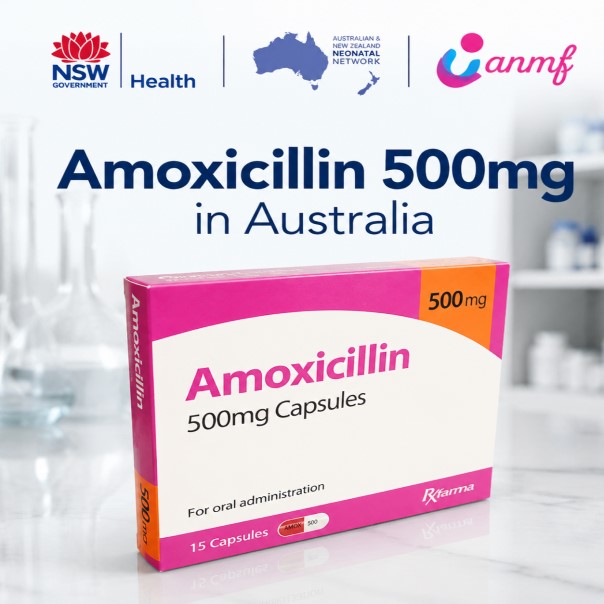
Amoxicillin 500mg is a prescription-only antibiotic capsule used across Australia to treat a wide range of bacterial infections, from ear and throat infections to chest infections and dental abscesses.
What is amoxicillin?
Amoxicillin is a broad-spectrum antibiotic belonging to the aminopenicillin family — a group of semi-synthetic penicillins. It works by disrupting the synthesis of the bacterial cell wall, which causes bacteria to break down and die. Because it targets the cell wall construction process, it is described as bactericidal: it kills bacteria rather than merely stopping them from growing.
Amoxicillin is effective against a wide range of gram-positive and gram-negative bacteria, making it one of the most commonly prescribed antibiotics in Australia and worldwide. It is available in Australia under the brand names Amoxil, Amoxicillin Sandoz, Ibiamox and others, as well as multiple generics.
Is amoxicillin a penicillin? Yes. Amoxicillin is structurally related to penicillin and belongs to the same beta-lactam antibiotic family. If you have a documented penicillin allergy, tell your doctor before being prescribed amoxicillin — cross-reactivity is possible, though less common than once thought. Your doctor will assess the type of reaction you had and decide whether amoxicillin is safe for you.
Important: Amoxicillin is an antibiotic — it only works against bacterial infections. It will not treat viral illnesses such as colds, flu, COVID-19 or most sore throats. Taking antibiotics when they are not needed contributes to antibiotic resistance, which is a growing public health concern in Australia. See Healthdirect’s guide to antibiotics for more on appropriate use.
Forms and prescription status in Australia
All amoxicillin products available in Australia are Schedule 4 — Prescription Only Medicines. You cannot purchase amoxicillin over the counter at Chemist Warehouse or any other pharmacy without a valid prescription. A prescription can be obtained from a GP in person or via a registered telehealth service.
| Form | Strengths | Common use | Schedule |
|---|---|---|---|
| Capsules / tablets | 250 mg, 500 mg, 875 mg | Bacterial infections in adults and older children | S4 — Prescription only |
| Oral liquid suspension | 125 mg/5 mL, 250 mg/5 mL | Children or adults who cannot swallow capsules | S4 — Prescription only |
| Paediatric drops | 100 mg/mL | Infants and young children | S4 — Prescription only |
The 500 mg capsule is the most commonly prescribed strength for adults. The 875 mg tablet is used for more severe or resistant infections and is often seen in combination products with clavulanic acid (such as Augmentin Duo Forte). Amoxicillin alone at 875 mg is less commonly dispensed as a standalone product.
If you need a prescription for amoxicillin and cannot get to a GP promptly, telehealth services can issue a valid Australian prescription online. Ensure any telehealth provider uses practitioners registered with AHPRA.
What is amoxicillin used for?
Amoxicillin treats bacterial infections across multiple body systems. Your doctor will decide whether amoxicillin is the right antibiotic based on the type of infection, likely bacteria involved, local resistance patterns and your medical history. It is not appropriate for all bacterial infections — some require a different antibiotic class.
Ear infections (otitis media)
Amoxicillin is typically the first-choice antibiotic for acute middle ear infections caused by bacteria, particularly in children. Most mild ear infections in adults resolve without antibiotics, but a doctor may prescribe amoxicillin if symptoms are severe or prolonged.
Throat and tonsil infections
Bacterial tonsillitis and strep throat (caused by Group A Streptococcus) are common indications for amoxicillin. A throat swab or rapid strep test is often recommended to confirm the infection is bacterial before prescribing, since most sore throats are viral.
Chest and respiratory infections
Amoxicillin is used for community-acquired pneumonia caused by susceptible organisms including Streptococcus pneumoniae, and for acute bronchitis where a bacterial cause has been confirmed. It is not effective against the bacteria responsible for atypical pneumonia (such as Mycoplasma) — those require a different antibiotic such as doxycycline or azithromycin.
Sinus infections (sinusitis)
Most acute sinusitis is viral and does not require antibiotics. When bacterial sinusitis is confirmed or strongly suspected after 10 or more days of symptoms, amoxicillin may be prescribed as a first-line treatment.
Urinary tract infections (UTIs)
Amoxicillin can treat UTIs caused by susceptible bacteria including Escherichia coli and Enterococcus faecalis. However, because amoxicillin resistance among common UTI-causing bacteria has increased, it is not always the first choice for uncomplicated UTIs in Australia — your doctor will consider local resistance data and may prefer trimethoprim or cefalexin as first-line options. A urine culture is useful to confirm the bacteria and its sensitivities before or during treatment.
Skin and soft tissue infections
Amoxicillin is effective against skin infections caused by non-penicillinase-producing Staphylococcus and Streptococcus species. However, if beta-lactamase-producing bacteria are suspected — which is common in skin infections — amoxicillin and clavulanic acid (Augmentin) is usually preferred instead.
Dental infections
Amoxicillin is one of the first-choice antibiotics for dental abscesses and other tooth infections when the infection has spread beyond the tooth itself. It may be prescribed alongside dental drainage procedures. Note that antibiotics alone are not a substitute for dental treatment — the source of infection must be addressed by a dentist.
What amoxicillin does not treat
Amoxicillin has no effect on viral infections — including colds, flu, most sore throats, COVID-19 and glandular fever. It is also ineffective against bacteria that produce beta-lactamase (an enzyme that destroys penicillin-type antibiotics), which is why amoxicillin with clavulanic acid is used when resistant bacteria are likely.
Dosage guide for adults
The standard oral dose of amoxicillin 500 mg for most infections in adults is three times daily (every 8 hours) for 5–7 days, though the duration varies by condition. Always follow the dose and duration on your prescription — completing the full course is important even if you feel better sooner, to prevent the infection from returning and to reduce the risk of antibiotic resistance.
| Condition | Dose | Frequency | Duration |
|---|---|---|---|
| Ear, throat, sinus infections (mild–moderate) | 500 mg | 3 times daily (every 8 hours) | 5–7 days |
| Chest infection / community-acquired pneumonia | 500 mg–1 g | 3 times daily | 5–7 days |
| Urinary tract infection | 500 mg | 3 times daily | 5–7 days |
| Dental infection | 500 mg | 3 times daily | 5 days |
| Skin infection (mild) | 500 mg | 3 times daily | 5–7 days |
| Severe infections | 875 mg or 1 g | Twice or three times daily | As directed by doctor |
Practical dosing schedule for 500 mg three times daily
A consistent schedule helps maintain steady antibiotic levels in the blood. A practical spacing is 8 am, 2 pm and 8 pm, or 7 am, 3 pm and 11 pm — any roughly equal spacing through the day works. Amoxicillin can be taken with or without food, though taking it with a meal can help reduce stomach upset.
What to do if you miss a dose
Take the missed dose as soon as you remember. If it is almost time for your next dose, skip the missed one and continue your regular schedule. Do not double up to make up for a missed dose. If you are unsure, ask your pharmacist.
Kidney function and dosing
Amoxicillin is primarily cleared by the kidneys. If you have reduced kidney function, your doctor may reduce the dose or extend the interval between doses. Always tell your prescriber about any kidney conditions before starting treatment.
Dosage for children
In children, amoxicillin is dosed by body weight in milligrams per kilogram (mg/kg), which means the correct dose varies with the child’s size. Your doctor or pharmacist will calculate the right dose and volume to give from the liquid suspension. Never guess a child’s dose based on an adult prescription.
The standard oral treatment dose for children is 25–50 mg/kg/day in divided doses — typically every 8 or 12 hours depending on age and the condition being treated. Your doctor will specify the exact dose, frequency and duration on the prescription.
Using the liquid suspension
Amoxicillin suspension is available in two concentrations: 125 mg/5 mL and 250 mg/5 mL. Always use the oral syringe or measuring spoon provided — a kitchen teaspoon is not accurate enough. Shake the bottle well before measuring each dose.
Reconstituted suspension should be stored in the refrigerator and discarded after 14 days. If your child has difficulty with the taste, the dose can be mixed with a small amount of milk or formula and given immediately — do not mix it in advance and store it.
For infants under 3 months, dosing is more complex and should only be directed by a doctor or paediatrician. For detailed clinical guidance on amoxicillin in newborns, see the ANMF neonatal amoxicillin guideline.
Amoxicillin vs amoxicillin and clavulanic acid
Some bacteria produce an enzyme called beta-lactamase, which breaks down penicillin-type antibiotics including amoxicillin, rendering the antibiotic ineffective. Clavulanic acid is a beta-lactamase inhibitor — it blocks this enzyme and protects amoxicillin from being destroyed, extending its effectiveness against resistant bacteria.
The combination of amoxicillin and clavulanic acid is sold in Australia under brand names including Augmentin, Clavulox, Curam and various generics. It is available in several strengths — 500 mg/125 mg and 875 mg/125 mg tablets are the most common adult formulations.
When does a doctor prescribe the combination instead of amoxicillin alone?
Your doctor will consider the combination when the infection is likely caused by beta-lactamase-producing bacteria, or when plain amoxicillin has not worked. Common situations include:
- Skin and soft tissue infections (where Staphylococcus aureus is often involved)
- Animal or human bites
- More severe or complicated ear infections
- UTIs where resistance to plain amoxicillin is likely based on culture results
- Dental infections that have not responded to amoxicillin alone
- Lower respiratory tract infections where resistant organisms are suspected
Amoxicillin and clavulanic acid generally causes more gastrointestinal side effects — particularly diarrhoea — than plain amoxicillin, because the clavulanate component affects gut bacteria. Taking it at the start of a meal reduces this. For a full guide to this combination, see our separate page on amoxicillin and clavulanic acid.
Amoxicillin vs cephalexin
Cephalexin (also spelled cefalexin) is another beta-lactam antibiotic — from the cephalosporin family rather than the penicillin family. Both amoxicillin and cephalexin are commonly prescribed in Australian general practice, and there is some overlap in what they treat, but they have distinct differences.
| Amoxicillin 500 mg | Cephalexin 500 mg | |
|---|---|---|
| Antibiotic class | Aminopenicillin (penicillin family) | First-generation cephalosporin |
| Typical frequency | 3 times daily | 2–4 times daily |
| Skin infections | Useful for streptococcal skin infections; less reliable for staph | First choice for skin and soft tissue infections including impetigo and cellulitis |
| Respiratory infections | First choice for strep throat and ear infections | Used as an alternative when penicillin allergy is a concern |
| UTIs | Used but amoxicillin resistance is common | Commonly prescribed for uncomplicated UTIs |
| Penicillin allergy | Avoid if true penicillin allergy | Usually safe if prior reaction to penicillin was mild; avoid if history of anaphylaxis |
Your doctor will choose between the two based on the type of infection, likely bacteria, local resistance patterns and your allergy history. Both are listed on the PBS and widely available at Australian pharmacies.
Side effects
Amoxicillin is generally well tolerated, but side effects do occur. The most important distinction to understand is between a common, non-allergic rash and a true allergic reaction — they look different and require different responses.
Common side effects
- Diarrhoea — the most frequent side effect, caused by disruption of normal gut bacteria. Usually mild and settles after the course finishes. Taking amoxicillin with food helps. Contact your doctor if diarrhoea is severe, bloody or persists beyond a few days after finishing the course.
- Nausea and stomach upset — taking the capsule with a meal reduces this.
- Skin rash — see below for the important distinction between a non-allergic rash and an allergic reaction.
- Vaginal thrush (in women) — antibiotics alter the balance of normal bacteria and can allow Candida yeast to overgrow, causing vaginal itching and discharge. An over-the-counter antifungal treatment (such as clotrimazole cream or a fluconazole tablet) can treat this if it occurs. Let your pharmacist know you are on antibiotics.
- Oral thrush — less common, but amoxicillin can cause a white coating on the tongue or in the mouth in some patients, particularly those who are immunocompromised or elderly.
The amoxicillin rash — non-allergic vs allergic
Approximately 5–10% of people taking amoxicillin develop a skin rash during the course. The majority of these rashes are not a true allergic reaction — they are a non-allergic, drug-related rash that is harmless and resolves on its own. Incorrectly labelling this as a penicillin allergy can unnecessarily limit antibiotic choices for life, so understanding the difference matters.
Non-allergic amoxicillin rash — what it looks like:
- Small, flat or slightly raised pink or red spots, typically less than 1 cm, in a symmetrical pattern
- Usually appears on the chest, abdomen or back, then spreads to the face, arms and legs
- Typically appears around days 5–7 of treatment, but can occur at any point
- Mildly itchy or not itchy at all
- Does not move around the body or change shape
- Resolves on its own within a few days, whether or not you stop the medication
This type of rash is particularly common when amoxicillin is taken during a viral illness — especially glandular fever (Epstein-Barr virus). Up to 80–100% of people with glandular fever who take amoxicillin develop this rash; it is not an allergy.
Signs that suggest a true allergic reaction — seek medical advice promptly:
- Hives: raised, very itchy red welts that change location on the body
- Rash appearing within 1–2 hours of the first or second dose
- Swelling of the face, lips, tongue or throat
- Difficulty breathing or swallowing
- Dizziness, rapid heart rate or feeling faint
If you develop any of these signs, stop the medication and call 000 or go to the nearest emergency department immediately — this is potentially anaphylaxis, which is a medical emergency. If you are unsure whether a rash is allergic or non-allergic, contact your GP or pharmacist rather than making the decision yourself.
Rare but serious side effects
Serious reactions to amoxicillin are uncommon but include severe skin reactions (such as Stevens-Johnson syndrome — blistering of the skin and mucous membranes), liver inflammation, and Clostridium difficile-associated diarrhoea (a severe gut infection that can occur during or after any antibiotic course). Contact your doctor if you develop yellowing of the skin or eyes, significant abdominal pain, or persistent severe diarrhoea during or after a course of amoxicillin.
Adverse reactions can be reported to the TGA at tga.gov.au/reporting-problems.
Amoxicillin and alcohol
This is one of the most commonly searched questions about amoxicillin, and the answer is more nuanced than a simple yes or no.
Is there a dangerous interaction? No. Unlike some other antibiotics — particularly metronidazole and tinidazole, which cause a severe reaction when combined with alcohol — amoxicillin does not have a direct pharmacological interaction with alcohol. Drinking a moderate amount while taking amoxicillin will not cause a toxic reaction, and it does not stop the antibiotic from working.
Should you still avoid alcohol? Practically speaking, yes — for two reasons. First, alcohol can worsen the gastrointestinal side effects of amoxicillin (nausea, diarrhoea, stomach upset). Second, alcohol impairs your immune system’s ability to fight infection, and when you are unwell enough to need antibiotics, giving your body the best chance to recover is a reasonable priority.
Research has shown that alcohol slightly delays the absorption of amoxicillin — it does not reduce the total amount absorbed, but the peak blood level is reached more slowly. This is unlikely to have a meaningful clinical impact in most situations.
The practical bottom line: one or two standard drinks on a single occasion is unlikely to cause harm or compromise your treatment. Heavy or daily drinking during a course of antibiotics is inadvisable. If you are also taking other medicines — particularly warfarin — talk to your pharmacist before drinking, as alcohol interacts with warfarin independently of the antibiotic. For general guidance on medicines and alcohol, see Healthdirect’s medicines and alcohol page.
Other medicines and interactions
Can you take Panadol (paracetamol) with amoxicillin?
Yes. There is no interaction between amoxicillin and paracetamol (Panadol). Taking paracetamol for fever or pain while on amoxicillin is safe and often recommended to manage symptoms of the infection itself.
Warfarin
Amoxicillin can increase the anticoagulant effect of warfarin in some patients, raising the risk of bleeding. If you take warfarin, your INR should be monitored more closely when starting or finishing a course of amoxicillin. Tell your prescriber and the GP managing your warfarin that you have been prescribed amoxicillin.
Oral contraceptives
The concern that antibiotics reduce the effectiveness of the oral contraceptive pill is largely a historical myth for most antibiotics, including amoxicillin. Current evidence does not support a clinically significant interaction between amoxicillin and combined oral contraceptives. However, if you experience significant diarrhoea or vomiting during your antibiotic course, absorption of your contraceptive pill may be affected — use additional contraception during this time and for seven days after symptoms resolve.
Other antibiotics and aminoglycosides
Amoxicillin should not be physically mixed with aminoglycoside antibiotics (such as gentamicin) as they inactivate each other. This is relevant in a hospital or IV setting — your clinical team will be aware of this. There is no issue with taking oral amoxicillin and aminoglycosides at different times under medical direction.
Pregnancy, breastfeeding and special populations
Amoxicillin is generally considered safe during pregnancy and is one of the few antibiotics commonly prescribed for bacterial infections in pregnant women. It is classified as compatible with pregnancy in Australian clinical guidelines when the benefits outweigh the risks. Always confirm with your GP or obstetrician before taking any antibiotic during pregnancy, as the choice of antibiotic may depend on the type of infection and how far along you are.
Breastfeeding
Amoxicillin passes into breast milk in small amounts. It is generally considered compatible with breastfeeding. The main risk to the infant is potential disruption of their gut bacteria, which could cause loose stools or a rash. If your breastfed baby develops diarrhoea or a rash while you are taking amoxicillin, mention it to your GP or a pharmacist.
Older adults
Amoxicillin can be used in older adults, but kidney function declines with age and may affect how the drug is cleared. If you are over 65 or have any kidney problems, your doctor may adjust the dose accordingly.
A note on amoxicillin for animals
Amoxicillin is also used in veterinary medicine for dogs, cats and other animals. Veterinary formulations are not the same as human preparations — concentrations, inactive ingredients and dosing are different. Do not give human amoxicillin to pets, and do not take veterinary amoxicillin intended for animals. Always obtain separate prescriptions from the appropriate practitioner for humans and animals.
Brands, PBS cost and where to buy
Amoxicillin is available under several brand names in Australia, including:
- Amoxil — the original branded 500 mg capsule
- Amoxicillin Sandoz — widely stocked generic
- Ibiamox and Fisamox — IV formulations used in hospitals
- Multiple other generics including Amoxicillin WGR, Noumed and Generic Health brands
All brands contain the same active ingredient (amoxicillin trihydrate) at equivalent concentrations and are therapeutically equivalent. When your prescription is filled, the pharmacist may dispense a generic instead of the brand your doctor wrote — this is standard practice in Australia and the medicine works the same way. If your doctor has indicated “no substitution” on the script, only the specified brand will be dispensed.
PBS listing and cost
Amoxicillin 500 mg capsules are listed on the Pharmaceutical Benefits Scheme (PBS), which means eligible Australian residents pay a subsidised co-payment rather than the full price.
Current PBS co-payments (2025–2026):
- General patients: approximately $31.60 per script
- Concession card holders: approximately $7.70 per script
In practice, many amoxicillin generics at Chemist Warehouse are priced below or at the PBS co-payment even on a private (non-PBS) script — for example, Amoxicillin WGR 500 mg 20 capsules is available for around $7.10 on both PBS and private pricing. Ask your pharmacist to confirm the cheapest option for your specific prescription.
Where to fill your prescription
Amoxicillin can be dispensed at any community pharmacy in Australia with a valid prescription — including Chemist Warehouse, Priceline, Terry White Chemmart and independent pharmacies. You can also use online pharmacy services that accept digital prescriptions via the Australian government’s My Health Record or electronic prescription system.
If you need a prescription urgently and cannot see a GP in person, telehealth services registered in Australia can issue a valid prescription. The prescription can then be sent electronically to your preferred pharmacy for dispensing or delivery.
Supply shortages
Australia has periodically experienced supply shortages of amoxicillin. If you cannot fill your prescription, speak to your pharmacist — they can advise on available generic substitutes or contact your prescriber about an alternative antibiotic if necessary. The TGA monitors medicine availability and issues guidance when shortages occur. Current shortage information is available via Healthdirect’s amoxicillin medicines page.
Medical disclaimer
This page provides general health information for Australian adults and is not a substitute for professional medical advice, diagnosis or treatment. Antibiotic choice, dose and duration should always be determined by a qualified health professional based on your specific clinical situation. Always complete the full prescribed course of antibiotics unless directed otherwise by your doctor. In a medical emergency, call 000. Verify current PBS listing and scheduling with your pharmacist or via the PBS website.