

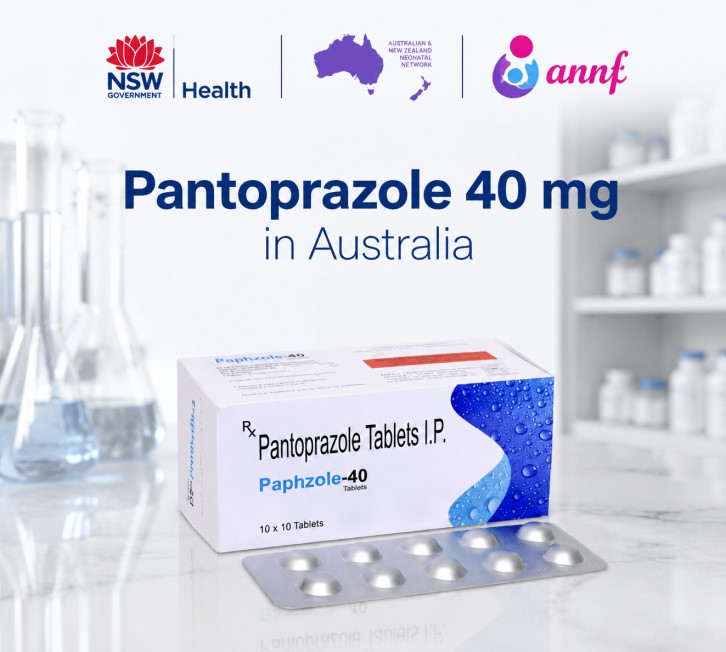
Essential information about pantoprazole 40 mg and 20 mg – what each dose is used for, how to take it correctly, side effects to look out for, and how it compares to omeprazole.
This article provides general information only and is not a substitute for professional medical advice. Always follow your doctor’s or pharmacist’s instructions. For clinical monographs used in hospital settings, see the ANMF Clinical Resources.
| Detail | Information |
|---|---|
| Medicine name | Pantoprazole |
| Active ingredient | Pantoprazole sodium sesquihydrate |
| Drug class | Proton pump inhibitor (PPI) |
| Brand names in Australia | Somac, Pantoprazole Sandoz, Pantoprazole Apo, APX-Pantoprazole, Pantoprazole WGR, Pantoprazole GenericHealth, Sozol |
| Available doses | 20 mg tablets • 40 mg tablets • 40 mg granules (sachet) • 40 mg injection (hospital use) |
| How it is dispensed |
40 mg: prescription only (Schedule 4) Somac Heartburn Relief 20 mg: pharmacist-only, no prescription needed (Schedule 3), adults 18+ only |
| PBS listed | Yes — subsidised with a valid prescription under the Pharmaceutical Benefits Scheme |
| TGA registered | Yes |
| Typical adult starting dose | 40 mg once daily |
| When to take | 30–60 minutes before a meal, preferably in the morning |
| How long until it starts working | Acid suppression begins within hours; full symptom relief usually within 2–4 weeks |
What is pantoprazole and how does it work?
Your stomach produces acid to digest food, but too much acid causes problems — heartburn, ulcers, and damage to the oesophagus (food pipe). Pantoprazole works by blocking the mechanism that produces this acid.
Specifically, it blocks an enzyme in the stomach lining called the hydrogen-potassium ATPase pump, also known as the proton pump. This pump is responsible for releasing acid into the stomach. By binding to it and switching it off, pantoprazole significantly reduces how much acid your stomach makes — regardless of what triggers that acid production (food, stress, or anything else).
Key facts about how it works:
- It is activated inside the stomach’s acid-secreting cells, which makes it highly targeted
- It reduces both ongoing (baseline) acid production and the extra acid produced after eating
- A single daily dose suppresses acid for up to 24 hours
- Unlike antacids (such as Mylanta or Gaviscon), pantoprazole does not neutralise acid already in the stomach — it prevents new acid from being produced
- The proton pump regenerates gradually, which is why daily dosing is needed for ongoing conditions
- It takes a few days of regular use to reach its full effect — do not expect immediate relief on day one
What is pantoprazole used for?
In Australia, pantoprazole is approved by the Therapeutic Goods Administration (TGA) for the following conditions in adults:
- Gastro-oesophageal reflux disease (GORD) — the most common use. Reduces heartburn, acid regurgitation, and the burning sensation in the chest and throat caused by stomach acid washing back up into the oesophagus.
- Reflux oesophagitis — inflammation or ulceration of the oesophagus caused by ongoing acid exposure. Pantoprazole helps the lining heal and prevents recurrence.
- Gastric ulcer (stomach ulcer) and duodenal ulcer — reduces acid so the ulcer can heal. If the ulcer is caused by Helicobacter pylori bacteria, pantoprazole is taken alongside antibiotics to eradicate the infection.
- Prevention of NSAID-related ulcers — people who take non-steroidal anti-inflammatory drugs (NSAIDs) such as ibuprofen or naproxen long-term are at higher risk of stomach ulcers. Pantoprazole 20 mg daily is often prescribed to protect the stomach lining.
- Zollinger-Ellison syndrome — a rare condition where a tumour causes the stomach to produce extremely large amounts of acid. Higher doses of pantoprazole are used to manage this.
- Gastrointestinal lesions not responding to H2 blockers — when older acid-reducing medicines (such as ranitidine, now discontinued) have not been effective enough.
In children aged 5–17 years, pantoprazole may be prescribed for GORD and reflux oesophagitis, but only for up to 8 weeks and under medical supervision. Speak with your doctor before giving this medicine to a child.
Pantoprazole 40 mg vs 20 mg — which dose and when?
The dose your doctor prescribes depends on your condition. Here is how the two main doses are typically used in Australia:
| Condition | Usual dose | Duration |
|---|---|---|
| Symptomatic GORD (heartburn, reflux) | 20 mg or 40 mg once daily | 4–8 weeks; may continue long-term to prevent recurrence |
| Reflux oesophagitis (initial healing) | 40 mg once daily | 4–8 weeks |
| Maintenance after healed reflux oesophagitis | 20 mg or 40 mg once daily | Long-term as directed |
| Gastric ulcer | 40 mg once daily | 4–8 weeks |
| Duodenal ulcer | 40 mg once daily | 2–4 weeks |
| H. pylori eradication (with antibiotics) | 40 mg twice daily | 7–14 days |
| NSAID-associated ulcer prevention | 20 mg once daily | While taking NSAIDs |
| Zollinger-Ellison syndrome | 80 mg or more daily (doctor-directed) | Long-term |
| Over-the-counter heartburn relief (Somac Heartburn Relief) | 20 mg once daily | 7–14 days maximum without seeing a doctor |
The choice between 40 mg and 20 mg — and how long to continue treatment — should be made by your doctor. Always use the lowest effective dose for the shortest time needed. See the FAQ section below for answers to common questions about timing and twice-daily dosing.
How and when to take pantoprazole
- Take it before eating: 30–60 minutes before your first meal of the day gives the best results. Taking it with or after food reduces how well it is absorbed.
- Swallow tablets whole: Do not crush, break, or chew the tablets. They have a special enteric coating that protects them from stomach acid and ensures they dissolve in the right place.
- Granule sachets (Somac 40 mg granules): Sprinkle the granules into a small amount of apple juice, orange juice, or water and swallow immediately. Do not chew. Can also be given through a nasogastric tube.
- Take it every day at the same time: Consistency matters. Pantoprazole works best when taken regularly, not just when symptoms flare.
- If you miss a dose: Take it as soon as you remember — unless it is almost time for your next dose. Do not double up to make up for a missed tablet.
- Do not stop suddenly without talking to your doctor: Some people experience a temporary increase in stomach acid (rebound acid hypersecretion) when stopping PPIs abruptly after long-term use. Your doctor may suggest tapering the dose.
How long does treatment last?
This depends on what you are being treated for:
- Short-term (4–8 weeks): for healing ulcers, oesophagitis, or initial GORD symptom relief. Once the condition has healed or symptoms are controlled, treatment may be stopped or the dose reduced. If symptoms return after stopping, speak with your doctor about ongoing management.
- Long-term: some people with severe GORD, Barrett’s oesophagus, or conditions requiring ongoing NSAID use may need pantoprazole indefinitely. In these cases, your doctor should review whether continued treatment is still needed at least once a year, using the lowest effective dose.
Long-term PPI use is common but carries some risks that your doctor will monitor for — these are described in the side effects section below.
Side effects
Like all medicines, pantoprazole can cause side effects, although not everyone experiences them. Most side effects are mild and resolve on their own.
Common side effects (affect up to 1 in 10 people)
- Headache
- Diarrhoea
- Nausea
- Stomach pain or discomfort
- Flatulence (wind)
- Constipation
- Dizziness
Less common side effects
- Dry mouth or altered taste (metallic taste)
- Sleep disturbances
- Skin rash or itching
- Elevated liver enzymes (detected on blood tests)
- Swollen joints or muscle pain
Serious side effects — seek medical attention if you notice:
- Low magnesium (hypomagnesaemia): More likely after 3 or more months of use. Symptoms include muscle cramps, tremors, irregular heartbeat, dizziness, or seizures. Your doctor may monitor your magnesium levels if you are on long-term treatment.
- Low vitamin B12: Long-term acid suppression can reduce absorption of vitamin B12. Symptoms include extreme tiredness, weakness, tingling in hands or feet, and memory problems.
- Bone fractures: Long-term use (over 1 year) has been associated with an increased risk of hip, wrist, or spine fractures, particularly in older people or those with osteoporosis.
- Acute interstitial nephritis: Rare kidney inflammation. Signs include changes in urination, lower back pain, fever, or rash. Stop taking pantoprazole and see a doctor immediately.
- Clostridium difficile infection: PPIs may slightly increase the risk of gut infection. Signs include severe or persistent diarrhoea with blood or mucus.
- Severe skin reactions: Very rare. Stevens-Johnson syndrome or toxic epidermal necrolysis — blistering, peeling skin, mouth sores. Stop the medicine immediately and seek emergency care.
- Allergic reaction: Difficulty breathing, swelling of the face, lips, or tongue. Call 000.
You can report suspected side effects to the TGA at tga.gov.au/reporting-problems. Always consult your doctor or pharmacist if you are concerned about any side effect.
Warnings and precautions
Before starting pantoprazole, tell your doctor if you:
- Are allergic to pantoprazole or any other PPI (such as omeprazole, esomeprazole, lansoprazole, or rabeprazole)
- Have liver disease or severe hepatic impairment — dose adjustment may be needed
- Are pregnant or planning to become pregnant — pantoprazole is Pregnancy Category B3; the safety in pregnancy has not been fully established
- Are breastfeeding — it is not recommended during breastfeeding
- Have osteoporosis or low bone density
- Have a vitamin B12 deficiency or are at risk of one
- Are over 65 — specific risks may apply; discuss with your doctor or pharmacist
- Have ever had to take heartburn or indigestion medicines continuously for 4 or more weeks
Important: do not mask serious symptoms
Pantoprazole relieves symptoms but can also mask warning signs of more serious conditions including stomach cancer. See your doctor promptly — and do not start or continue pantoprazole without medical advice — if you have:
- Unintentional weight loss
- Difficulty swallowing (dysphagia)
- Vomiting blood, or vomiting that does not stop
- Black or tarry stools (indicating bleeding in the gut)
- Anaemia
- Heartburn or indigestion symptoms that are new and you are over 40 years of age
- Symptoms that persist despite 2 weeks of treatment with the over-the-counter 20 mg tablet
Neuroendocrine tumour investigations
Pantoprazole raises blood levels of a marker called chromogranin A (CgA), which can interfere with tests for neuroendocrine tumours. If you are scheduled for such testing, stop taking pantoprazole at least 14 days before the test and speak with your doctor.
Drug interactions
Tell your doctor or pharmacist about all medicines you are taking — including over-the-counter products, vitamins, and herbal supplements — before starting pantoprazole. Important interactions include:
| Medicine or substance | What may happen |
|---|---|
| Atazanavir (HIV medicine) | Do not take together — pantoprazole significantly reduces how much atazanavir the body absorbs |
| Ketoconazole (antifungal) | Reduced absorption of ketoconazole |
| Methotrexate (used in cancer and autoimmune conditions) | Pantoprazole may increase methotrexate levels in the blood, increasing toxicity risk |
| Warfarin (blood thinner) | May increase the anticoagulant effect; INR monitoring may be needed |
| Clopidogrel (antiplatelet) | Some evidence of slightly reduced effect; discuss with your doctor |
| Digoxin (heart medicine) | May slightly increase digoxin levels |
| Iron supplements or iron absorption | Reduced stomach acid may decrease iron absorption; take iron supplements at a different time |
| Alcohol | Alcohol does not directly interact with pantoprazole, but it irritates the stomach lining and worsens reflux — minimising alcohol intake is advisable |
Pantoprazole is metabolised by the liver enzyme CYP2C19. People who are “poor metabolisers” of this enzyme (a genetic variation) may have higher pantoprazole levels in the blood. Your doctor will be aware of this if relevant.
Pantoprazole vs omeprazole vs esomeprazole
Pantoprazole, omeprazole, and esomeprazole are all proton pump inhibitors and work in exactly the same way. Patients and doctors sometimes ask which one is better.
| Pantoprazole | Omeprazole | Esomeprazole | |
|---|---|---|---|
| Common brands in AU | Somac, Pantoprazole Sandoz | Losec, Omeprazole Sandoz | Nexium, Esomeprazole Sandoz |
| Standard adult dose | 40 mg once daily | 20–40 mg once daily | 20–40 mg once daily |
| Available without prescription (AU) | Yes — Somac Heartburn Relief 20 mg (S3) | Yes — Losec 10 mg and 20 mg (S2/S3) | Yes — Nexium 20 mg (S3) |
| PBS listed | Yes | Yes | Yes |
| Drug interactions | Fewer interactions with CYP enzymes | More interactions, including clopidogrel | Moderate |
| Clinical effectiveness | All three are considered clinically equivalent for most conditions at standard doses | ||
In practice, all three medicines are similarly effective. The choice between them often comes down to cost, availability, drug interactions, and your doctor’s preference. Pantoprazole is often preferred when potential interactions with other medicines are a concern, because it has a lower potential for interaction via the CYP2C19 enzyme than omeprazole.
If you have been switched from omeprazole to pantoprazole (or vice versa) by your pharmacist or doctor, this is normal practice — both medicines are interchangeable for most people.
Brand names and generic versions in Australia
Pantoprazole is available in Australia under several brand names and as generics. All contain the same active ingredient — pantoprazole sodium sesquihydrate — at the same strength, and are considered bioequivalent, meaning they work the same way in the body.
| Brand name | Sponsor / manufacturer | Available strengths | Prescription required? |
|---|---|---|---|
| Somac | Takeda | 20 mg tablets, 40 mg tablets, 40 mg granule sachets, 40 mg injection | 40 mg: yes. Somac Heartburn Relief 20 mg: no (S3 pharmacist-only) |
| Pantoprazole Sandoz | Sandoz Pty Ltd | 20 mg tablets, 40 mg tablets | Yes (S4) |
| Pantoprazole Apo | Apotex Pty Ltd | 20 mg tablets, 40 mg tablets | Yes (S4) |
| APX-Pantoprazole | Apotex Pty Ltd | 40 mg tablets | Yes (S4) |
| Pantoprazole WGR | GM Pharma International | 40 mg tablets | Yes (S4) |
| Pantoprazole GenericHealth | Generic Health | 40 mg tablets | Yes (S4) |
| Sozol | See TGA ARTG for current sponsor details | 40 mg tablets | Yes (S4) |
Your pharmacist may dispense a different brand than what is written on your prescription — this is called brand substitution and is legal and routine in Australia. If you have concerns about a particular brand, speak with your pharmacist.
PBS listing and cost in Australia
Pantoprazole 40 mg tablets are listed on the Pharmaceutical Benefits Scheme (PBS), meaning most Australians with a valid prescription pay a subsidised price at the pharmacy.
- PBS general patient co-payment: Up to the standard PBS co-payment amount per script (check the current PBS schedule as this is updated regularly)
- PBS concession card holders pay a reduced co-payment
- Safety Net: Once your total PBS co-payments in a calendar year exceed the Safety Net threshold, subsequent PBS medicines may be free or at reduced cost
- Without a prescription (Somac Heartburn Relief 20 mg): Available over the counter at major Australian pharmacies including Chemist Warehouse, Priceline, and others; prices vary by retailer
For the most current PBS information and co-payment amounts, visit pbs.gov.au or ask your pharmacist.
Frequently asked questions
Can I buy pantoprazole over the counter in Australia?
It depends on the dose. Somac Heartburn Relief 20 mg is available without a prescription from a pharmacist (Schedule 3) for adults 18 and over — for short-term relief of frequent heartburn over a 7–14 day course. Pantoprazole 40 mg requires a prescription from a doctor (Schedule 4). If symptoms persist beyond 2 weeks of the 20 mg over-the-counter product, see your doctor rather than continuing to self-treat.
How long does pantoprazole take to work?
Pantoprazole begins suppressing acid within a few hours of the first dose. However, most people do not feel significant symptom relief for 2–5 days, and full benefit — particularly for healing oesophagitis or ulcers — typically takes 2–4 weeks of daily use. It is important to take it every day, even if you do not notice an immediate improvement.
Can I take pantoprazole 40 mg twice a day?
Twice-daily dosing (40 mg twice daily = 80 mg total per day) is used in specific situations: during H. pylori eradication therapy (alongside antibiotics) and for Zollinger-Ellison syndrome. For most people with GORD or ulcers, once-daily 40 mg is the standard dose. Do not increase your dose to twice daily without your doctor’s instruction — it does not improve symptom relief for typical reflux disease.
What is the best time of day to take pantoprazole 40 mg?
The morning, 30–60 minutes before breakfast, is the optimal time. Proton pumps in the stomach are most active when stimulated by a meal, and pantoprazole needs to reach these pumps before they are activated. Taking it before your first meal of the day maximises how well it works. If you are on twice-daily dosing, take the second dose 30–60 minutes before your evening meal.
Are there foods to avoid while taking pantoprazole?
Pantoprazole itself does not have specific food interactions the way some other medicines do. However, certain foods worsen the acid reflux that pantoprazole is treating. To get the most benefit, it helps to avoid or reduce: fatty or fried foods, spicy food, chocolate, coffee and caffeine, alcohol, carbonated drinks, citrus juices, and large meals before lying down. Eating smaller meals, avoiding eating within 2–3 hours of bedtime, and elevating the head of the bed can also improve symptoms alongside medication.
Is pantoprazole the same as Somac?
Yes. Somac is the original brand name for pantoprazole in Australia — they contain the same active ingredient and work identically. Generic versions such as Pantoprazole Sandoz, Pantoprazole Apo, and APX-Pantoprazole are bioequivalent, meaning the body absorbs and uses them in the same way. All PBS-listed brands are available at the same subsidised cost with a prescription.
Can I take pantoprazole long-term?
Many Australians take pantoprazole long-term under medical supervision — particularly those with severe GORD, Barrett’s oesophagus, or conditions requiring ongoing NSAID use. Long-term use is generally considered safe when clinically necessary, but it is not without potential risks, including lower magnesium levels, reduced vitamin B12 absorption, and a small increase in fracture risk. Your doctor should review whether you still need pantoprazole at least once a year and use the lowest effective dose.
Can I take pantoprazole with other medicines?
Pantoprazole has relatively few drug interactions compared to some other PPIs, but some important interactions exist — particularly with atazanavir (HIV treatment), methotrexate, warfarin, and ketoconazole. Always tell your doctor and pharmacist about all medicines, vitamins, and supplements you take before starting pantoprazole. See the drug interactions section above for a full list.
Is pantoprazole safe during pregnancy?
Pantoprazole is classified as Pregnancy Category B3 in Australia — meaning animal studies have shown some concern, and the safety in human pregnancy has not been fully established. It is generally not recommended during pregnancy unless clearly needed and under medical supervision. If you are pregnant or trying to conceive and are experiencing reflux, speak with your doctor about the safest options, which may include lifestyle changes or other medicines.
What is APX-Pantoprazole or Pantoprazole WGR?
APX-Pantoprazole and Pantoprazole WGR are generic brand names for pantoprazole 40 mg registered on the Australian Register of Therapeutic Goods (ARTG). They contain the same active ingredient at the same dose as Somac and are PBS-listed. Your pharmacist may dispense one of these instead of Somac — they work the same way.
Summary
Pantoprazole is a well-established, TGA-registered proton pump inhibitor widely used in Australia for GORD, reflux oesophagitis, stomach and duodenal ulcers, prevention of NSAID-related ulcers, and Zollinger-Ellison syndrome. The standard adult dose is 40 mg once daily, taken 30–60 minutes before breakfast. A lower dose of 20 mg is used for mild GORD, NSAID ulcer prevention, and as the over-the-counter Somac Heartburn Relief formulation for short-term heartburn relief. It is PBS-listed and available under several brand names including Somac, Pantoprazole Sandoz, and APX-Pantoprazole — all bioequivalent.
While pantoprazole is generally well-tolerated, long-term use requires periodic review by your doctor. Consult your doctor or pharmacist if you have any questions about whether pantoprazole is right for you, what dose to take, or how long to continue treatment.
This article is written for patients and the general public in Australia and New Zealand. It provides general information only and is not a substitute for professional medical advice, diagnosis, or treatment. Articles in the ANMF Medication section are reviewed by a qualified healthcare professional under the editorial leadership of Dr Srinivas Bolisetty PSM, MD, FRACP, Chair of the Australasian Neonatal Medicines Formulary. ANMF does not accept sponsorship or funding from pharmaceutical or commercial organisations. For clinical monographs, visit ANMF Clinical Resources.